Book Appointment

Take the first step towards a pain-free, active life with expert orthopaedic, physiotherapy, and diagnostic care.

Frozen Shoulder

  • Home|
  • Physiotherapy

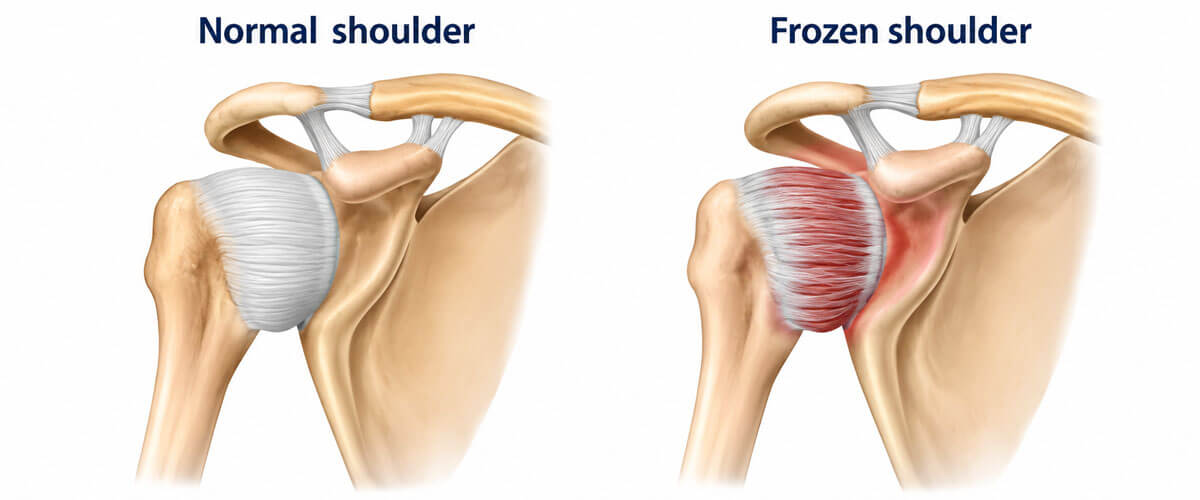
Frozen shoulder, also known as adhesive capsulitis, is a condition characterized by stiffness, pain, and restricted movement in the shoulder joint. It often develops gradually and can significantly limit everyday activities such as reaching, lifting, or dressing. Physiotherapy is central to recovery, helping to relieve pain, restore movement, and prevent long-term stiffness.

What is Frozen Shoulder?

Frozen shoulder occurs when the connective tissue surrounding the shoulder joint (the joint capsule) becomes thickened and tight, restricting movement. The condition typically progresses through distinct stages, gradually worsening before slowly improving, and can take several months to over a year to fully resolve without proper management.

Stages of Frozen Shoulder
  • Freezing stage – gradual onset of pain with increasing stiffness and reduced range of motion.
  • Frozen stage – pain may reduce, but stiffness becomes more pronounced, severely limiting movement.
  • Thawing stage – movement gradually improves as the shoulder capsule loosens over time.
Common Symptoms
  • Dull or aching shoulder pain, often worse at night.
  • Progressive stiffness and reduced range of motion.
  • Difficulty raising the arm overhead or behind the back.
  • Pain that may radiate into the upper arm.
  • Difficulty performing routine tasks such as dressing or reaching for objects.
Causes and Risk Factors
  • Prolonged shoulder immobility, often following injury or surgery.
  • Diabetes and thyroid disorders.
  • Age, most commonly affecting individuals between 40 and 60 years.
  • Previous shoulder trauma or overuse.
  • Certain autoimmune or inflammatory conditions.
Goals of Physiotherapy
  • Reduce pain and inflammation in the shoulder joint.
  • Gradually restore range of motion.
  • Prevent further stiffening of the joint capsule.
  • Strengthen surrounding shoulder muscles as mobility improves.
  • Support a return to normal daily activities and function.
Physiotherapy Techniques Used
  • Stretching exercises – gentle, progressive stretches to improve flexibility and range of motion.
  • Manual therapy – joint mobilization techniques to reduce stiffness and improve movement.
  • Strengthening exercises – introduced as pain decreases to restore muscle support.
  • Heat therapy – to relax the shoulder muscles and ease stiffness before exercise.
  • Electrotherapy – such as ultrasound or TENS for pain relief.
  • Postural correction – to reduce compensatory strain on the shoulder and neck.
A Gradual, Stage-Based Approach

Because frozen shoulder progresses through distinct phases, treatment is adjusted according to the current stage of the condition. Aggressive stretching too early can worsen pain, while a well-timed, progressive approach helps achieve the best long-term results. In persistent or severe cases, physiotherapy may be combined with other treatments such as injections or, rarely, surgical intervention.

With a structured, patient-specific physiotherapy program, individuals with frozen shoulder can achieve significant pain relief, regain shoulder mobility, and return to their normal daily activities.