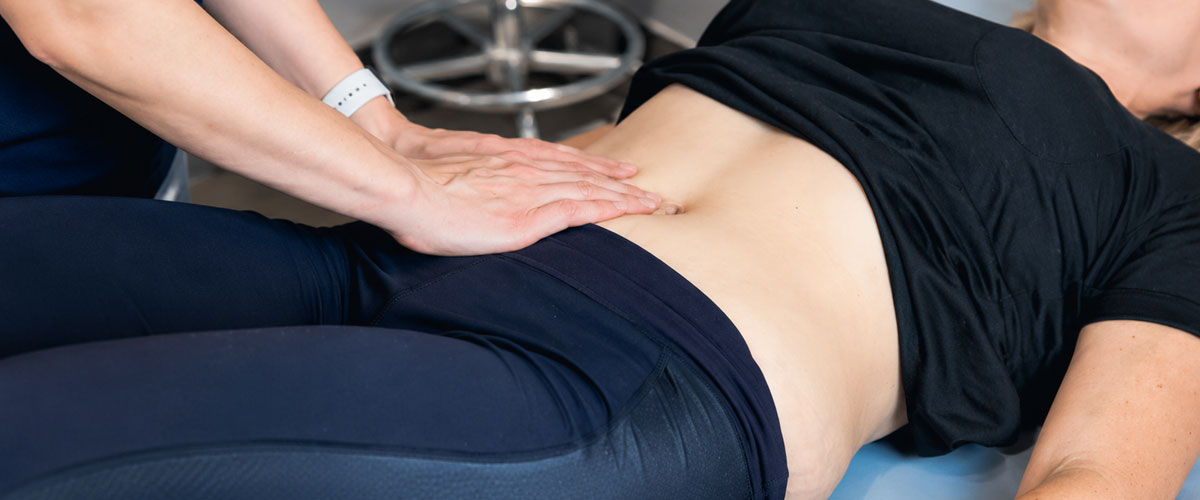
Diastasis recti is a common condition among postpartum women, involving the separation of the abdominal muscles that occurs during pregnancy. Physiotherapy plays a key role in safely restoring core strength, closing the muscle gap where possible, and helping women regain abdominal function and confidence after childbirth.
What is Diastasis Recti?
Diastasis recti occurs when the two bands of abdominal muscles (the rectus abdominis) separate along the midline of the stomach, stretching the connective tissue between them. This separation is a natural response to the growing uterus during pregnancy, but in some cases the gap does not fully close on its own after delivery, leading to core weakness and a visible abdominal bulge.
Common Symptoms
- A visible bulge or "doming" along the midline of the abdomen, especially when straining.
- A soft gap felt between the abdominal muscles above or below the navel.
- Lower back pain due to reduced core support.
- Weak core strength and difficulty performing abdominal exercises.
- Poor posture and pelvic instability.
- A feeling of abdominal weakness during daily activities.
Causes and Risk Factors
- Pregnancy-related stretching of the abdominal wall.
- Multiple pregnancies, increasing the likelihood and severity of separation.
- Carrying multiples (twins or more).
- Larger baby size or excess abdominal weight during pregnancy.
- Improper core engagement during and after pregnancy.
- Genetic factors affecting connective tissue elasticity.
Goals of Physiotherapy for Diastasis Recti
- Safely reduce the abdominal muscle gap.
- Restore core strength and stability.
- Improve posture and reduce associated back pain.
- Support pelvic floor function alongside core recovery.
- Prevent worsening of the separation through correct movement patterns.
- Guide a safe return to exercise and daily activities.
Physiotherapy Techniques Used
- Deep core activation exercises – targeting the transverse abdominis to support gradual muscle re-approximation.
- Pelvic floor exercises – to support overall core function alongside abdominal recovery.
- Postural correction – to reduce strain on the abdominal wall during daily movement.
- Breathing techniques – coordinated breathing to support safe core engagement.
- Functional movement retraining – guidance on safe ways to move, lift, and exercise without worsening the separation.
- Progressive strengthening program – carefully staged exercises that avoid high-pressure abdominal movements early in recovery.
What to Avoid During Recovery
Certain exercises and movements — such as traditional sit-ups, crunches, or heavy straining — can worsen diastasis recti if performed too early or incorrectly. Physiotherapists guide patients on which movements to avoid and how to safely modify daily activities and exercise routines while the core is healing.
Through targeted core rehabilitation and safe, progressive exercise, physiotherapy helps women recover from diastasis recti, restoring abdominal strength, improving posture, and supporting a confident return to full activity.